




As schools expand their digital capabilities, one question consistently surfaces: can modern online platforms integrate effectively with the structured databases many institutions have relied on for years?
Many of these decisions are shaped by broader challenges in education, including issues like data fragmentation across school systems, which often complicates how information is managed and shared.
In this article, we explore how an online school management system connects with existing data environments, what administrators should know about school database integration, and the role of SIS integrations in creating a unified digital ecosystem. The goal is to provide clarity for decision makers who are assessing whether new solutions can align with their current infrastructure while improving overall data accuracy and operational efficiency.
Understanding How Online School Management Systems Connect With Existing Databases
Before adopting new digital tools, schools often want clarity on how an online school management system exchanges information with databases already in place. Most modern solutions are designed with flexibility in mind, allowing them to communicate with student records, administrative systems, and academic data sources through structured APIs or standardized data formats. This approach supports smooth school database integration, ensuring information can flow between platforms without disrupting daily operations.
Effective SIS integrations go beyond simple data transfer. They establish a consistent sync between systems so that student profiles, attendance records, enrollment details, and other essential information remain aligned. This creates a cohesive digital environment where schools can modernize their workflows while maintaining accuracy and continuity across all existing data sources.
What Schools Need to Know About Database Architecture and Compatibility
Before integrating new digital tools, it is important for schools to understand the structure and limitations of their current data environment. Database architecture influences how easily a new online school management system can connect, how data flows between platforms, and whether updates remain accurate and consistent over time. This context forms the foundation of any successful school database integration.
Key considerations include:
- The type of database currently in use, whether legacy on-premises or cloud-based.
- How data is formatted, stored, and accessed within existing systems.
- Security protocols and permission settings that control external data connections.
- Whether current platforms support APIs, middleware, or standardized exchange methods.
- The frequency of data updates and how that affects sync requirements.
- Alignment between administrative workflows and the capabilities of prospective tools.
- The level of technical support available to manage and maintain SIS integrations.
The Role of SIS Integrations in Creating a Unified Data Environment
A unified digital environment depends on how well different platforms communicate with one another. Effective SIS integrations allow an online school management system to connect with existing databases in a way that supports smooth data flow, reduces administrative duplication, and maintains consistent records across all departments. This creates a foundation where information is accurate, accessible, and aligned with daily operational needs.
- School Database Integration: Ensures that student, academic, and administrative data remain consistent across all connected systems.
- Centralized Data Accuracy: Keeps records synchronized so updates are reflected everywhere in real time.
- Operational Efficiency: Reduces manual entry and lowers the risk of errors by automating data movement across platforms.
- Improved Communication: Supports better collaboration among staff by providing unified access to reliable information.
- Scalable Infrastructure: Lays the groundwork for future digital adoption by allowing schools to expand or update systems without disrupting existing data structures.
These capabilities help schools move toward a cohesive digital ecosystem that supports both current operational needs and long-term strategic goals.
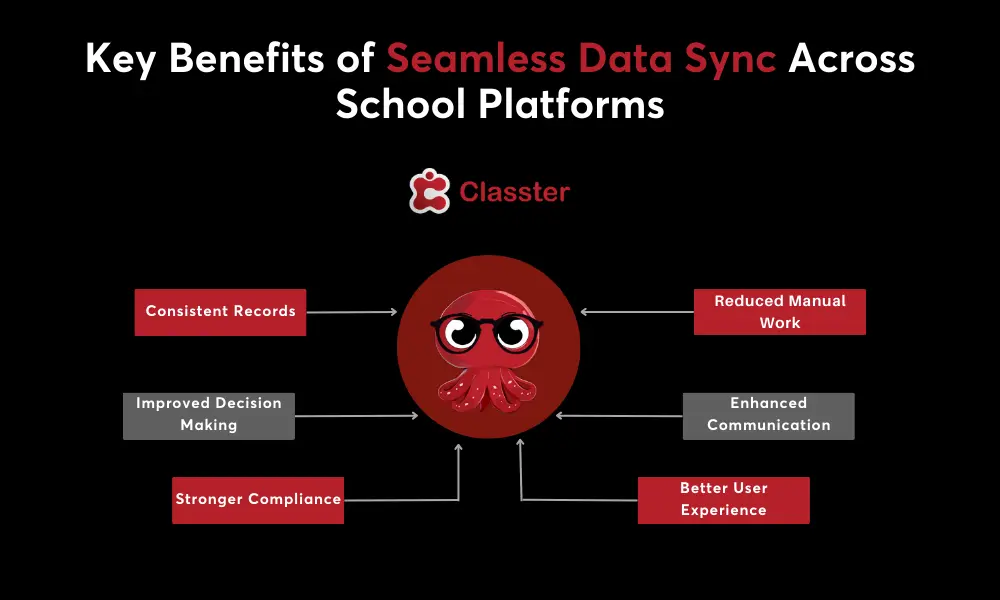
Key Benefits of Seamless Data Sync Across School Platforms
A smooth and reliable data sync ensures that every system within the school ecosystem works from the same source of truth. When an online school management system supports strong SIS integrations, the result is a more efficient and accurate digital environment that reduces administrative strain and enhances overall coordination.
- Consistent Records: Information remains aligned across systems, reducing discrepancies and ensuring reliable school database integration.
- Reduced Manual Work: Automated data updates cut down on repetitive tasks and limit the chance of human error.
- Improved Decision Making: Access to accurate, real-time data supports better planning, reporting, and academic oversight.
- Enhanced Communication: Teachers, administrators, and support staff can collaborate more effectively with unified access to essential records.
- Stronger Compliance: Consistent data helps schools meet reporting requirements and maintain policy adherence without additional effort.
- Better User Experience: Students, parents, and staff benefit from smooth processes supported by well-coordinated systems.
Common Integration Challenges and How to Address Them
Integrating a new online school management system with existing databases can introduce a few obstacles, especially when schools rely on older infrastructure or fragmented digital tools. Understanding these challenges early helps institutions prepare more effectively and achieve smoother school database integration supported by reliable SIS integrations.
- Legacy Systems: Older databases may not support modern APIs or data exchange methods.
Solution: Work with vendors who provide middleware or custom connectors that bridge old and new systems. - Inconsistent Data Formats: Different platforms may store information in incompatible structures.
Solution: Standardize data fields and use mapping tools to align formats before syncing. - Limited IT Resources: Some schools lack in-house technical teams to manage integrations.
Solution: Choose a system that offers dedicated vendor support and guided implementation. - Security and Permission Barriers: Strict access controls can interfere with data flow between systems.
Solution: Review permission settings and establish secure, role-based access that supports safe integration. - Fragmented Workflows: Existing administrative processes may not align with new digital tools.
Solution: Conduct workflow assessments to ensure the new system complements, rather than disrupts, daily operations. - Data Accuracy Issues: Incorrect or outdated information can be replicated across platforms during sync.
Solution: Perform data cleaning and validation before initiating any large-scale integration.
Addressing these challenges thoughtfully helps schools set a strong foundation for seamless, long-term integration success.
How Classter Supports Seamless School Database Integration
Classter is built to help schools modernize without disrupting the systems they already rely on. As an online school management system, it offers a flexible integration framework that connects smoothly with existing databases, whether they are cloud-based or built on older on-premises structures. This approach allows schools to enhance their digital capabilities while preserving the integrity of their current data environment.
Classter supports seamless school database integration by offering robust API connections, standardized data formats, and tools that simplify the exchange of information between systems. Its strong SIS integrations keep student records, academic information, and administrative data aligned across platforms, ensuring consistent and accurate updates in real time. With automated syncing, clear configuration options, and comprehensive vendor support, Classter makes it easier for schools to build a unified and dependable digital ecosystem.
FAQ’s
Yes. Most modern school management software uses APIs, middleware, or standardized data formats that allow seamless integration with legacy and cloud-based databases.
Schools need clear data structures, API support, access permissions, and clean datasets to ensure the student information system syncs accurately.
Yes. Classter connects with most legacy and cloud-based databases using secure APIs, data mapping tools, and customizable integration options.