




An average of 2,507 cyberattack attempts per week is a stark reminder of how exposed digital environments have become, including those used by schools. As education systems increasingly rely on technology to manage daily operations, vast amounts of student data are stored, accessed, and shared through digital platforms. This shift has brought clear benefits for efficiency and collaboration, but it has also raised the stakes around privacy and security.
Schools no longer keep enrollment records, medical information, grades, attendance, and parent contact details in filing cabinets. They live inside school management systems that must balance accessibility with protection. As a result, conversations around data privacy in schools and school cybersecurity measures are no longer limited to IT teams. They sit at the center of decision making for school leaders, administrators, and governing bodies evaluating how schools protect student data. This article explains why protecting student data has become a critical priority and what schools should expect from secure school management systems.
Why Student Data Protection Matters More Than Ever
The consequences of inadequate data protection in education extend far beyond technical disruptions. Student information is deeply personal, and once compromised, it cannot simply be reset or replaced. Identity exposure, unauthorized profiling, and long term misuse of records can affect students well into adulthood, making responsible data stewardship a fundamental duty for every school.
Schools also operate within increasingly complex regulatory environments. Expectations around consent, data handling, and retention continue to evolve, placing greater pressure on institutions to demonstrate accountability. Data privacy in schools is now closely tied to governance, reputation, and compliance, requiring clear policies and consistent oversight rather than reactive fixes after an incident occurs.
The Growing Cybersecurity Risks Facing Digital School Environments
Schools are facing a growing number of digital threats that specifically target the systems holding student data. As more users, platforms, and external tools connect to school management systems, the likelihood of unauthorized access, data exposure, and service disruption increases. Key cybersecurity risks include:
- An expanding digital footprint: Learning platforms, communication tools, payment systems, and third-party integrations now operate together, increasing the number of potential entry points if systems are not properly secured.
- More sophisticated attack methods: Phishing, ransomware, credential theft, and account takeovers are increasingly designed to exploit everyday user behavior, not just technical vulnerabilities.
- Multiple user groups accessing systems: Staff, students, and parents all require access, making consistent password practices and permission controls critical to protecting student data.
- Limited internal security resources: Many schools operate without dedicated cybersecurity teams and rely on their school management system to provide core protection and monitoring.
How School Management Software Protects Data at the System Level
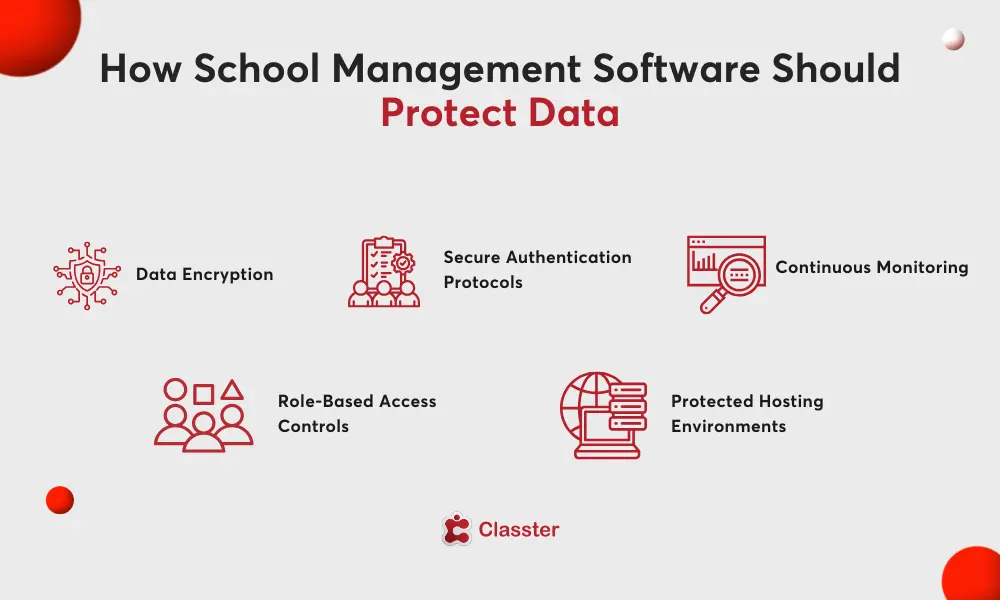
School management software plays a central role in safeguarding student data by embedding school cybersecurity measures directly into the system architecture. Instead of relying on manual processes or individual user behavior alone, protection is built into how the platform stores, transmits, and controls access to information. System-level security protections typically involve:
- Data encryption: Sensitive student data is encrypted both at rest and in transit, reducing the risk of exposure during storage or transmission.
- Role-based access controls: Permissions are assigned based on user roles, ensuring staff, students, and parents only access information relevant to them.
- Secure authentication protocols: Login safeguards help prevent unauthorized access to school management systems and student records.
- Protected hosting environments: Data is stored within secure infrastructure designed to isolate systems and defend against external threats.
- Continuous monitoring and system updates: Ongoing oversight, security patches, and platform updates help maintain protection as cyber threats evolve.
What School Leaders Should Look for When Evaluating Secure Systems
When evaluating a school management system, school leaders must look beyond surface-level features and focus on how effectively the platform protects student data. Security is not a single function but a combination of policies, controls, and system-level safeguards that work together to support long term reliability and trust. When reviewing secure platforms, leaders should consider:
- Built in security by design: A strong school management system embeds school cybersecurity measures into its core architecture rather than treating them as optional add-ons.
- Clear access and permission controls: Role-based access ensures only authorized users can view or manage sensitive student data, supporting responsible data handling across departments.
- Proven data protection standards: Look for platforms that demonstrate a clear commitment to data privacy in schools through documented security practices and compliance frameworks.
- Ongoing monitoring and updates: Regular system updates, threat monitoring, and vulnerability management indicate that security is actively maintained rather than addressed only at setup.
- Transparency and accountability: Vendors should clearly explain how school management software protects data, including where data is stored, how it is secured, and how incidents are handled.
How Classter Helps Schools Protect Student Data
Classter is designed with security at the core, helping schools manage sensitive information confidently within a unified school management system. Rather than layering security on top of existing workflows, Classter integrates protection directly into how data is accessed, stored, and managed across the platform, supporting both operational efficiency and data privacy in schools.
- Centralized data control: Classter reduces fragmentation by consolidating academic, administrative, and communication workflows into a single school management system, limiting unnecessary data duplication and exposure.
- Role-based access and permissions: Access to student data is governed by clearly defined user roles, ensuring staff, students, and parents only interact with information relevant to them.
- Built-in school cybersecurity measures: Security protocols such as encryption, secure authentication, and protected infrastructure are embedded at the system level to safeguard data throughout its lifecycle.
- Compliance-driven data handling: Classter supports responsible data governance aligned with modern expectations around data privacy in schools, helping institutions meet regulatory and accountability requirements.
- Ongoing platform maintenance and updates: Continuous system updates and monitoring help address emerging risks and reinforce how school management software protects data over time.
By combining operational functionality with strong security foundations, Classter enables schools to protect student data while maintaining transparency, trust, and long term digital resilience.
FAQs
Digital platforms store student data such as academic records, attendance, health information, behavioral notes, and parent contact details across student information systems and learning management systems.
Strong data privacy in schools supports regulatory compliance, reduces institutional risk, and reinforces accountability at leadership and board level.
Classter embeds school cybersecurity measures directly into its unified school management system, supporting secure access, storage, and data governance.