



How to Manage Rapid Summer Enrollment Cycles Without Chaos

If you run a language school, coding bootcamp, arts academy, or sports programme, summer is your most commercially significant season and your most operationally demanding one. In the space of eight weeks, you might run four or five separate courses, each with its own intake window, its own fee structure, its own instructor, its own room, and its own cohort of learners ranging in age, level, and prior experience.
How to Build Your School’s Digital Transformation Roadmap During the Summer Break

Your institution enrolls 2,000 students. You run a tight operation. Then you open the renewal quote from your enterprise SIS vendor and the number on the page belongs to a research university with 40,000 students on five campuses.
Keeping Parents and Students Informed Over the Summer: Communication Strategies for Schools

For most schools, the moment the last bell rings in June, communications go quiet. Staff are on leave. Offices are unstaffed. The website sits unchanged. And somewhere out there, parents are refreshing their inboxes wondering whether their child’s class has been confirmed, whether the uniform policy has changed, and whether anyone at the school is actually thinking about September.
How colleges can use summer break to fix their financial aid and billing workflows

It’s week three of the fall semester. A student walks into the finance office frustrated, confused, holding a bill that doesn’t reflect the scholarship she was awarded in July. Your finance admin pulls up her record. The scholarship is there, in the financial aid system. But it never made it to the billing module. So, the invoice went out wrong, the payment plan is off, and now someone has to spend two hours manually reconciling what should have been an automatic sync.
The School IT Summer Checklist: Data Audits, Security Reviews, and System Upgrades

Every school IT lead knows the feeling. The moment the last exam submission lands and the building empties out, there’s a brief, quiet window before it all starts again. No tickets flooding in. No “the system’s down and we have 200 students trying to register” emergencies. Just you, the infrastructure, and eight to ten weeks to fix the things that term time never let you touch.
How to Run a Paperless Summer Admissions Process: From Application to Enrollment

Every summer, admissions teams across schools and higher education institutions face the same exhausting ritual: printed application packs stacked on desks, spreadsheets tracking who submitted what, inboxes drowning in scanned passports and transcript PDFs, and staff manually chasing applicants for missing documents. The rush is real. But here’s the thing it doesn’t have to be this way.
SIS Migration Costs: What Vendors Don’t Tell You

Your institution enrolls 2,000 students. You run a tight operation. Then you open the renewal quote from your enterprise SIS vendor and the number on the page belongs to a research university with 40,000 students on five campuses.
American University of Bahrain: Driving Operational Excellence with Classter

Before implementing Classter, AUBH faced persistent challenges with disconnected systems, unreliable integrations, limited reporting, and inefficient manual processes. These issues affected admissions, registration, finance, and the overall user experience, while also reducing confidence in the system’s ability to support operational and strategic needs. We were looking for a solution that could bring these functions together in a more reliable and integrated way.
Why Small and Mid-Sized Universities Are Abandoning Enterprise SIS Vendors

Your institution enrolls 2,000 students. You run a tight operation. Then you open the renewal quote from your enterprise SIS vendor and the number on the page belongs to a research university with 40,000 students on five campuses.
Parent Portals for Schools: Why It Matters and What to Look For
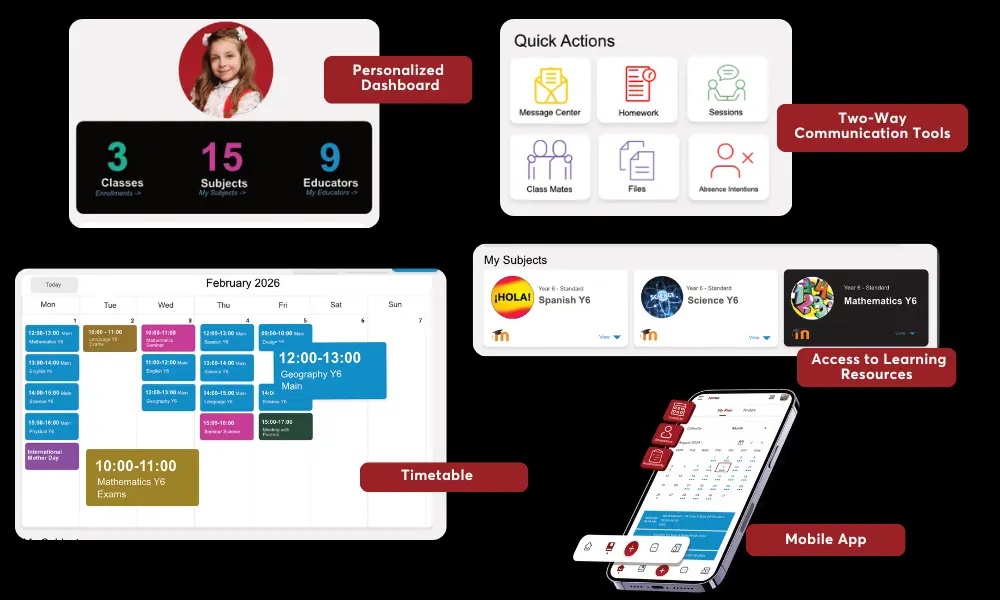
The relationship between a school and the families it serves is built on communication. When parents feel informed about their child’s progress, they are better equipped to support learning at home, more likely to engage constructively when issues arise, and more confident in the school’s ability to manage effectively.